
10 Lazy-Person Strategies That Actually Work in 2026
If you’ve been putting off effortless meal prep because it sounds like a lot of work, here’s the stat that should change your mind: the average US adult wastes $1,500 a year on groceries that get bought, ignored, and thrown out. A simple, low-effort prep system fixes that problem without requiring you to spend your entire Sunday in the kitchen.
Key Takeaways
| Question | Quick Answer |
|---|---|
| What is effortless meal prep? | Cooking or assembling meals in batches so you spend less time in the kitchen during the week, without rigid plans or marathon cook sessions. |
| How long does meal prep actually take? | A smart, lazy prep session can take as little as 30-60 minutes once you have a repeatable system in place. |
| What are the best containers for meal prep? | Glass containers last 5 to 10 times longer than plastic and are safer for reheating. See our complete guide to choosing meal prep containers. |
| Can you lose weight with meal prep? | Yes. Prepping your meals removes the daily decision fatigue that leads to impulsive, higher-calorie choices. |
| Is meal prep worth it financially? | Absolutely. The average home-cooked meal costs $4.23 vs. $16.28 at a restaurant. That’s nearly a 300% difference per plate. |
| What’s the easiest meal prep method for beginners? | The slow cooker method. You dump ingredients in, walk away, and come back to a fully cooked meal. Zero standing required. |
| Do I need to cook every day to eat well? | No. Explore our guide on how to lose weight without cooking every single day for practical alternatives. |
1. What Effortless Meal Prep Actually Means (And Why You’ve Been Overcomplicating It)
Most people picture effortless meal prep as cooking 20 Tupperware containers every Sunday while listening to a podcast. That’s not what we’re talking about here.
Effortless meal prep is about reducing friction. It means making just enough decisions in advance so that Tuesday night’s dinner doesn’t require a single ounce of willpower.
The whole point is to work with your biology, not against it. When food is already prepped, your brain defaults to eating it instead of ordering takeout.
- You don’t need to prep every meal, just the ones where you historically crack under pressure.
- You don’t need complicated recipes. Simple, repeatable meals are the whole strategy.
- You don’t need hours. Even 30 minutes of smart prep on a Sunday saves you 4+ hours across the week.
Think of it as building a system, not a Sunday ritual you dread. Once the system runs, you barely have to think about it.
2. The “Cook Once, Eat Four Times” Rule for Effortless Meal Prep
The single biggest upgrade you can make to your effortless meal prep routine is the multiplier principle: every time you turn on the stove or oven, make at least 3-4 portions.
This isn’t about being obsessive. It’s pure math. If cooking one chicken breast takes 20 minutes, cooking four takes the same 20 minutes.
“Stop thinking of cooking as a daily chore. Think of it as a once-or-twice-a-week production run. The goal is to touch the stove as few times as possible while still eating well.”
Here’s how the multiplier principle looks in practice:
- Proteins: Roast a tray of chicken thighs or hard-boil a dozen eggs. Done for 4-5 days.
- Grains: Cook a large pot of rice, quinoa, or oats once. Reheat portions as needed.
- Vegetables: Roast two full sheet pans on the same rack at the same time. Double output, zero extra effort.
- Sauces: Make one versatile sauce (like a simple tahini dressing or tomato base) that works across multiple meals.
Mix and match these components across the week and you have 15+ meal combinations from one prep session. That’s the smart way, not the hard way.
3. How to Choose the Best Containers for Effortless Meal Prep
Your containers are the unsung heroes of any effortless meal prep system. The wrong ones leak, warp, stain, and make you want to quit entirely.
Here’s what the data says: glass meal prep containers last 5 to 10 times longer than plastic alternatives. They’re also microwave-safe, don’t absorb food odors, and don’t require you to remember which plastic grades are “safe to reheat.”
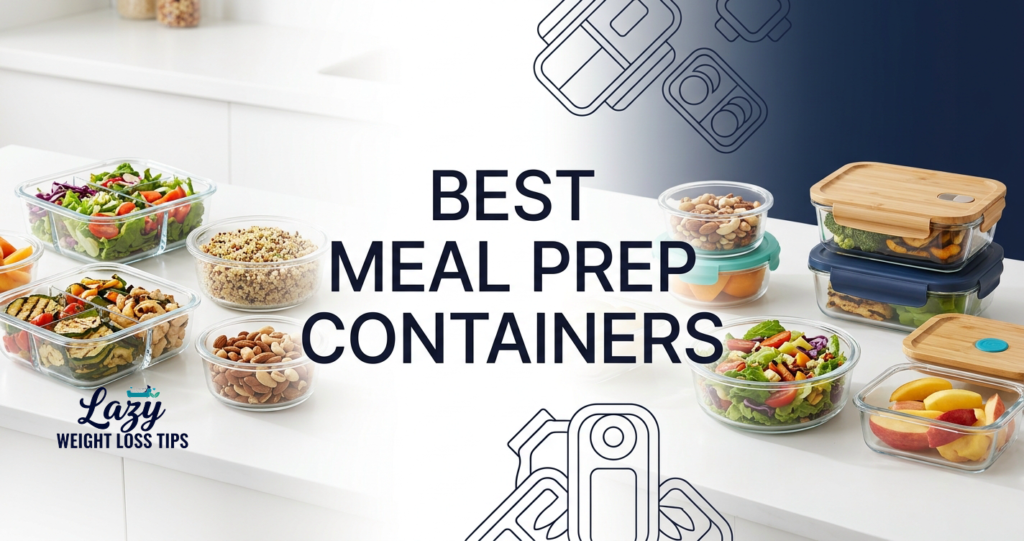
When picking containers for your meal prep setup, focus on these four things:
- Airtight lids: Non-negotiable. Containers that leak in your bag are containers you stop using.
- Stackable design: Saves fridge space and makes it easy to see exactly what’s available.
- Portion size variety: A mix of large (full meals) and small (snacks, sauces, dressings) containers covers every scenario.
- Dishwasher-safe: If cleaning them is a pain, you will stop using them. It’s that simple.
We’ve put together a full breakdown in our lazy person’s guide to choosing the best meal prep containers, including which features actually matter vs. which ones are just marketing noise.
Did You Know?
81% of Americans use shortcuts like meal prep kits or ready-to-eat meals to get dinner on the table.
Source: hellofresh.com
4. Slow Cooker Meal Prep: The Laziest Method That Actually Delivers Results
If you want effortless meal prep at its absolute peak, the slow cooker is your best friend. You add ingredients in the morning, press a button, and come back to a fully cooked meal.
No stirring. No watching. No timing anything.
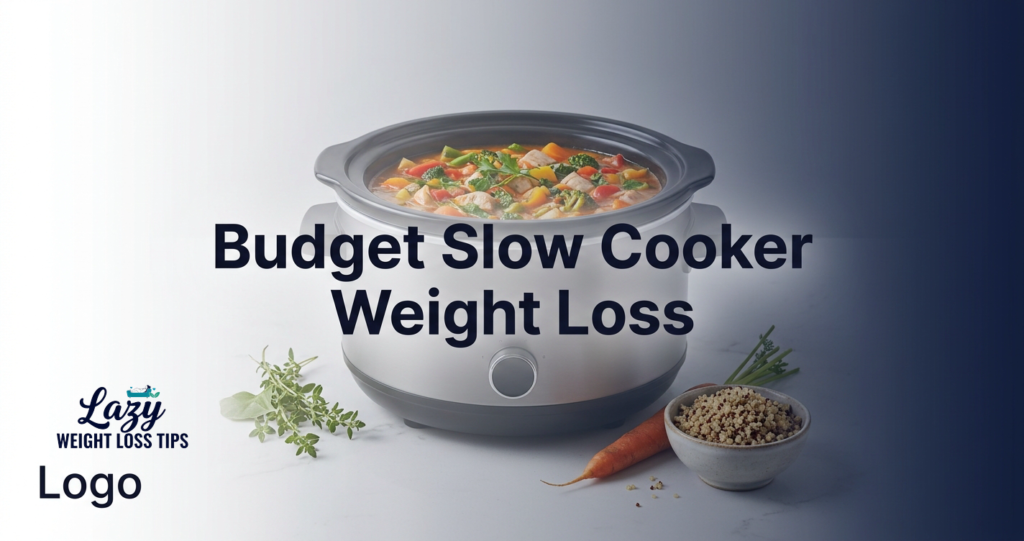
Slow cooker meals also tend to be naturally high in protein and fiber, which keeps you full longer without much thought. Here are the best “dump and go” categories for weight-loss-friendly slow cooker prep:
- Soups and stews: Throw in beans, vegetables, broth, and spices. 6-8 hours later, you have 4-6 portions ready to go.
- Pulled chicken or pork: Versatile, cheap, and works in wraps, bowls, or straight from the container.
- Oatmeal (overnight): Set it before bed. Wake up to a warm, ready-to-eat breakfast. Zero morning effort required.
- Lentil or chickpea dishes: Extremely cost-effective and incredibly filling per dollar spent.
We’ve compiled the best budget-friendly options in our top slow cooker recipes for weight loss guide, including actual cost-per-serving breakdowns.
5. No-Cook Effortless Meal Prep Ideas for People Who Hate the Stove
Here’s something most meal prep guides won’t tell you: you don’t have to cook anything to have a solid week of meals lined up. No-cook prep is the ultimate lazy strategy.
It works especially well for breakfasts, lunches, and snacks, which are the meals where most people fall off track during a busy week.
Here’s a no-cook prep list that takes under 20 minutes total:
| Meal | Prep Time | Lasts |
|---|---|---|
| Overnight oats (x5 jars) | 10 minutes | 5 days |
| Pre-washed salad greens + toppings | 5 minutes | 3-4 days |
| Greek yogurt + fruit + granola (portioned) | 5 minutes | 3 days |
| Pre-cut vegetables + hummus (portioned) | 8 minutes | 4-5 days |
| Cheese + whole grain crackers + fruit bags | 5 minutes | 4 days |
None of these require a recipe. None require skill. They just require a few minutes and some containers, which is exactly the kind of low-barrier system that actually sticks.
6. 10 Lazy Breakfast Prep Ideas to Start Every Morning on Autopilot
Breakfast is the meal most people skip or botch because there’s no time and no plan. Effortless meal prep fixes both of those problems in one shot.
When breakfast is already sitting in your fridge, ready to grab, you stop defaulting to nothing or to a pastry from the coffee shop.
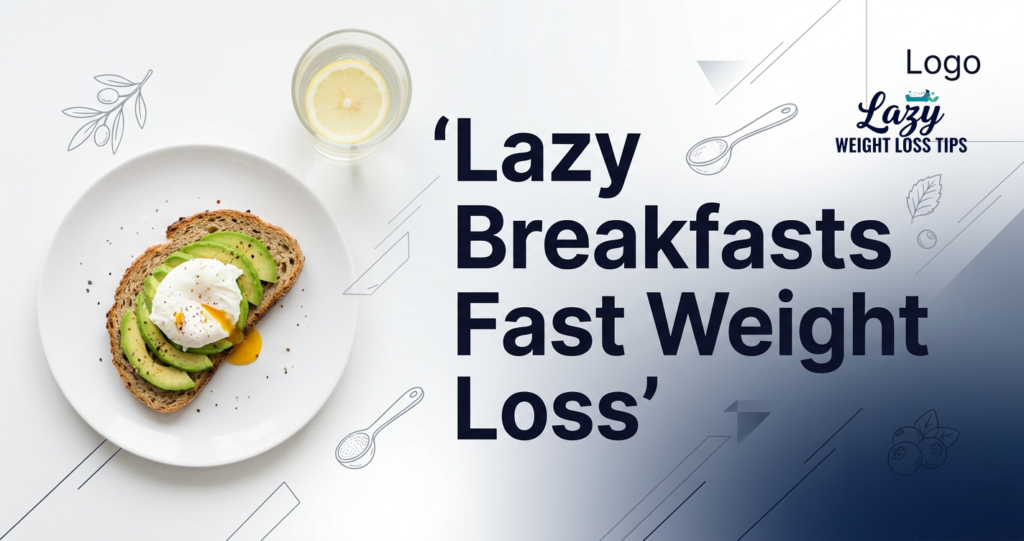
Here are 10 breakfasts you can prep in advance and grab without thinking:
- Overnight oats: Mix oats, milk, and toppings the night before. Done in 2 minutes.
- Egg muffins: Whisk eggs with vegetables, pour into a muffin tin, bake once, eat all week.
- Chia pudding: Chia seeds + liquid + fruit. 5 minutes of prep, 5 days of breakfasts.
- Smoothie packs: Pre-portion smoothie ingredients into bags, freeze them, blend in 60 seconds each morning.
- Hard-boiled eggs: Batch cook a dozen on Sunday. Grab two every morning.
- Baked oatmeal (sliced): Make one tray, cut into portions, reheat each morning in 90 seconds.
- Cottage cheese bowls: Pre-portion with toppings. No cooking, no prep beyond assembly.
- Protein pancake stacks: Cook a big batch, stack and refrigerate. Toast in a toaster each morning.
- Mini frittatas: Similar to egg muffins but with a bit more heft. Perfect for filling breakfasts with zero morning effort.
- Yogurt parfait cups: Layer yogurt, granola, and berries into cups. Grab and go, literally.
We go deep on all ten of these in our lazy breakfast ideas guide, including which ones are best for keeping you full until lunch.
7. The Financial Case for Effortless Meal Prep (The Numbers Are Wild)
We already know the average US adult wastes $1,500 a year in groceries. But the restaurant equation makes meal prep even more compelling.
The average home-cooked meal costs just $4.23. The equivalent restaurant meal? $16.28. That’s nearly a 300% markup every single time you order out instead of eating something you prepped.
For a household of two, eating out instead of prepping just five dinners a week adds up to roughly $6,200 extra per year.
Here’s what makes effortless meal prep a genuine financial strategy, not just a cooking habit:
- Buying in bulk: Proteins, grains, and frozen vegetables cost significantly less per serving when purchased in larger quantities.
- Reducing food waste: Effective meal planning and inventory management can reduce household food waste by 15% to 25%, according to industry research.
- Fewer impulse purchases: When you have food ready at home, you don’t stop for convenience store snacks or fast food on the way home.
- Less spoilage: Prepped meals get eaten because they’re visible, portioned, and ready. Random ingredients at the back of the fridge get forgotten.
The math is simple. Effortless meal prep isn’t just about eating better. It’s about keeping money in your pocket with almost no extra effort.
Did You Know?
Meal kit users save an average of 4.2 hours per week on cooking preparation and planning — that’s roughly an extra half-day of free time every single month.
Source: cnet.com
8. How to Lose Weight Without Cooking Every Single Day
One of the biggest myths about weight loss is that you need to cook fresh meals every day to see results. You don’t. That’s not how any of this works.
The reality is that consistency beats freshness every single time. Eating the same prepped chicken and rice bowl four days in a row is infinitely better than eating perfectly one day and ordering pizza the next three because you ran out of energy to cook.
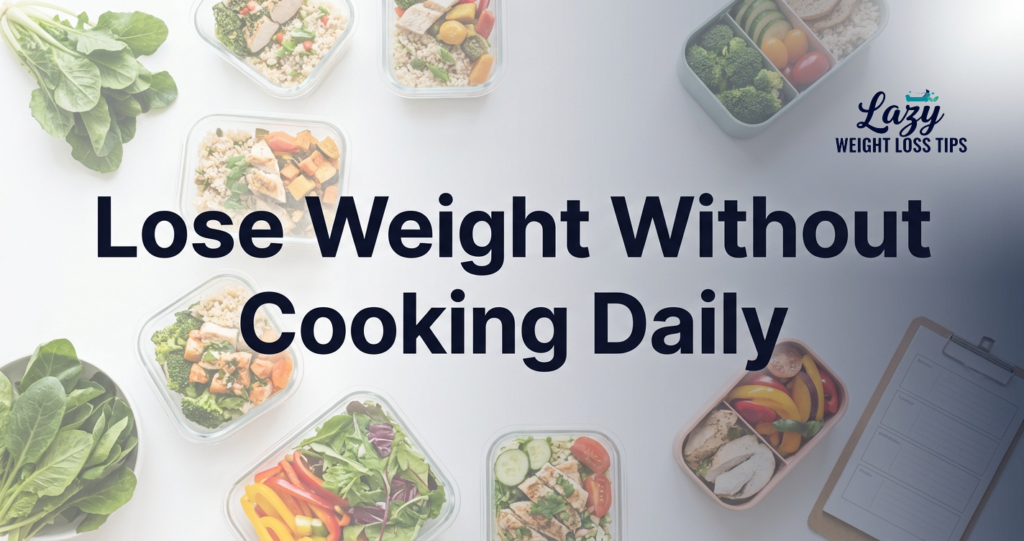
Here’s the practical system for eating well without daily cooking:
- The 2-cook-day system: Pick two days a week (Sunday and Wednesday work well) as your only cooking days. Everything else is just reheating or assembling.
- Strategic freezer use: In 2026, 77% of consumers buy frozen foods with a specific meal in mind. Keep a rotation of quality frozen proteins and vegetables as backup options.
- Rotisserie chicken: One store-bought rotisserie chicken gives you protein for 3-4 meals. Shred it, portion it, done.
- Assembly meals: Some of the best “meals” aren’t cooked at all. A bowl with prepped grains, pre-washed greens, canned beans, and a dressing is a complete, satisfying meal that takes under 3 minutes.
The goal isn’t to be a home chef. The goal is to eat well with the least possible effort, and that’s entirely achievable without standing over a stove every day.
9. Smart Grocery Shopping: The Foundation of Any Effortless Meal Prep System
Effortless meal prep starts at the store, not in the kitchen. If you buy the wrong things, or just wander the aisles with no plan, your prep session will feel like work instead of a 30-minute system check.
Here are the principles that make grocery shopping as efficient as the prep itself:
- Shop with a category list, not a recipe list. Buy proteins, grains, vegetables, and snacks as general categories. This gives you flexibility without requiring you to stick to one specific recipe per item.
- Stick to the perimeter first. Fresh produce, proteins, and dairy live around the edges of most stores. Hit those first before dipping into the center aisles.
- Keep a “always-in” frozen list. A consistent rotation of 3-4 frozen vegetables and proteins means you’re never fully out of options, even if you skipped prep week.
- Use an app or running notes list. In 2026, 69% of Americans are using or are open to using AI tools to help plan dinner. A simple running shopping list on your phone removes the mental load entirely.
- Batch buy where it makes sense. Oats, canned beans, olive oil, rice, and spices are all items where buying in larger quantities saves money and reduces how often you shop.
The best prep sessions happen when everything you need is already at home. Nail the shopping, and the actual cooking becomes the easy part.
10. Your Simple Weekly Effortless Meal Prep Template (Steal This)
The reason most people don’t stick to meal prep isn’t lack of motivation. It’s lack of a repeatable template. When you have to reinvent your system every week, the friction builds up until you quit.
Here’s a bare-minimum weekly template that takes about 45-60 minutes total and keeps you covered for the full week:
| Prep Item | How to Prep | Time |
|---|---|---|
| 1 protein source (chicken, eggs, beans) | Roast, boil, or slow cook in bulk | 20-30 min (hands-off) |
| 1 grain or starch (rice, oats, quinoa) | Cook a large batch, portion into containers | 15-20 min (hands-off) |
| Roasted vegetables (any 2-3 types) | Chop, toss in oil, roast on two trays simultaneously | 25 min (hands-off) |
| Breakfasts x 5 (oats or egg muffins) | Assemble overnight oats or bake egg muffins | 10-15 min |
| 1 sauce or dressing | Whisk or blend, store in a jar | 5 min |
That’s it. Five components. One session. An entire week of meals that take under 5 minutes each to assemble on any given day.
The key is keeping it repeatable. Swap out the protein, grain, or vegetable variety each week if you want. But keep the structure exactly the same so it becomes automatic.
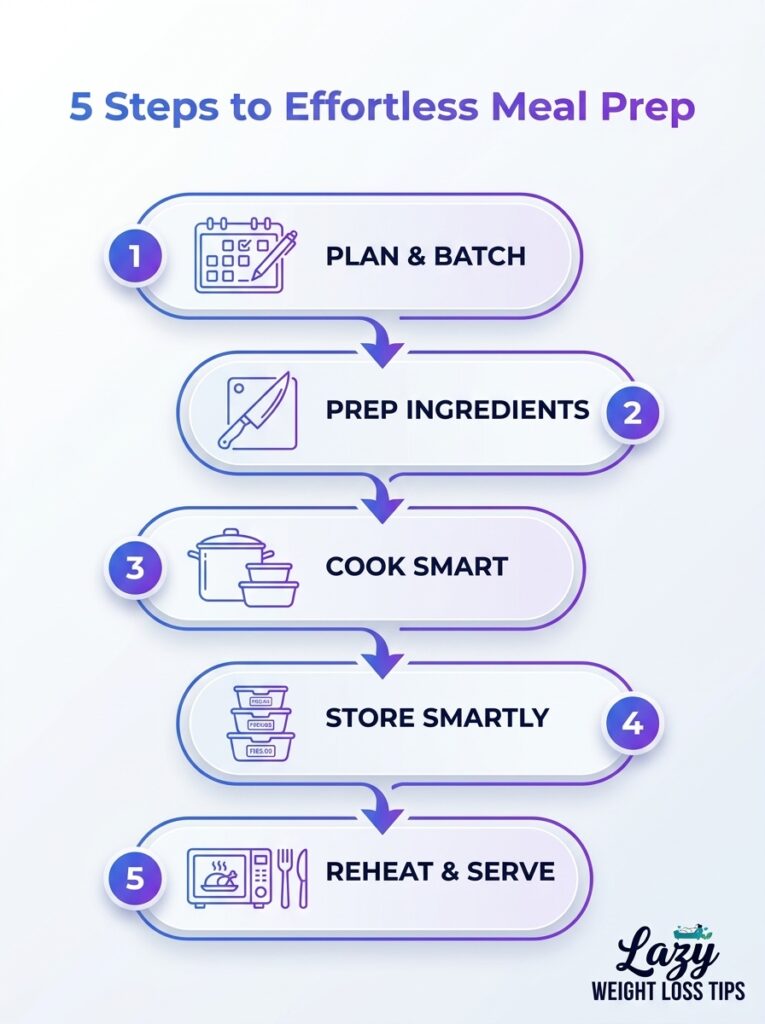
Five simple steps to effortless meal prep explained in this infographic. Following them saves time and makes weeknight meals healthier.
Bonus: Using the Science of Habit to Make Effortless Meal Prep Stick
Knowing how to meal prep is the easy part. Actually doing it consistently week after week is where most people hit a wall. The good news is that the science of habit formation is entirely on your side here.
Here’s what the research on behavior actually tells us about making meal prep automatic:
- Anchor it to an existing habit. Prep happens right after the Sunday grocery run, not “sometime on Sunday.” The existing habit (shopping) triggers the new one (prepping).
- Reduce the setup friction to near zero. Keep your containers washed and stacked visibly. If getting started requires hunting for equipment, you won’t start.
- Start smaller than feels necessary. Your first prep week should be embarrassingly simple. Two proteins and one grain. That’s it. Build from there.
- Use visual cues. A fridge full of labeled, portioned containers is its own motivation. You can see progress. That matters more than people realize.
If you want to understand the psychology behind why lazy strategies work better than willpower-based ones, our mindset and motivation resources break it all down without the jargon.
And if you’re curious about the actual science of why your body responds differently to consistent home-prepped eating vs. irregular restaurant meals, the metabolism and science section has the no-nonsense explainers you need.
Conclusion: Effortless Meal Prep Is the Smartest Low-Effort Investment You Can Make in 2026
Effortless meal prep isn’t about becoming a different person or overhauling your lifestyle. It’s about putting a simple, repeatable system in place so that eating well requires the least possible effort on any given day.
The numbers back it up: you save money, reduce waste, reclaim hours, and stop making impulsive food decisions when you’re tired and hungry. That’s not willpower. That’s just having a smarter system than the one you have right now.
Start with one component this week. Pick a protein, prep a batch, and see how the week feels different when at least one decision is already made for you.
- Browse all our effortless meal prep guides and resources to find the approach that fits your schedule.
- Not sure where your biggest obstacles are? Take the weight loss procrastination assessment to figure out exactly what’s getting in your way.
- Want to understand the bigger picture of how your habits connect to long-term results? Check out our longevity and lifestyle content for the long game strategies.
The smart way is always going to beat the hard way. And effortless meal prep is one of the clearest examples of that principle in action.