
10 Smart Workouts That Get Results Without Destroying Your Social Life
Smart workouts are officially having their moment, and the numbers back it up: 77.7% of all selected digital workouts today are 30 minutes or less, proving that the fitness world has finally caught up to what the rest of us already knew. You don’t need to spend two hours sweating it out in a gym to see real results, especially if you’re approaching exercise the right way.
Key Takeaways
| Question | Quick Answer |
|---|---|
| What is a smart workout? | A workout designed around efficiency, strategy, and recovery rather than sheer volume or intensity. |
| How long should a smart workout be? | Research in 2026 shows 20 to 30 minutes is the sweet spot for most people. |
| Do smart workouts work for weight loss over 30? | Yes. Structured, consistent movement paired with a solid nutrition approach (like popular diets such as keto) can be highly effective for people over 30. |
| Do I need equipment for smart workouts? | Nope. Many effective smart workout formats use nothing but your body weight. |
| How do I track smart workout progress? | A wearable device, fitness app, or even a simple journal works well. Consistency of tracking matters more than the tool you use. |
| Where can I check my metabolic baseline before starting? | Try our metabolic age and BMR calculator to understand where your body currently stands. |
| Are smart workouts only for experienced gym-goers? | Not at all. They’re designed for anyone, especially beginners and busy people who want results without the overwhelm. |
1. What Are Smart Workouts (And Why Traditional Exercise Is Kind of Dumb)
Let’s be real: grinding through an hour-long workout five days a week sounds great in theory. In practice, most people quit by week two.
Smart workouts flip that script entirely. Instead of measuring effort by how exhausted you feel afterward, they measure success by how consistently you show up and how well your body actually responds over time.
The core idea is simple: efficiency over intensity. You work smarter, not harder, by targeting the movements and methods that deliver the highest return for the time you put in.
This approach is particularly useful for busy people over 30 who want real, lasting results without the burnout that comes with punishing routines.
2. Smart Workouts for Weight Loss for Men and Women Over 30: Keto Diet, Popular Diets, Tips and Strategies That Actually Work Together
Here is something that nobody tells you enough: exercise alone rarely moves the needle the way most people hope it will. What you eat is the other half of the equation, and in 2026, the smartest approach combines intelligent movement with a nutrition strategy that actually suits your lifestyle.
For weight loss for men and women over 30, popular diets like the keto diet, Mediterranean eating, and lower-carb approaches are frequently paired with smart workout routines because they tend to support fat adaptation and energy stability without requiring you to eat nothing but rice cakes.
The key is not to chase the trendiest diet or the most brutal fitness plan. The key is picking a combination that you can repeat next week, and the week after that.
- Pair compound strength movements with a protein-focused eating plan
- Use short cardio sessions (10 to 20 minutes) to complement your primary workouts
- Eat in a slight calorie deficit rather than a dramatic one
- Prioritize sleep as part of your smart workout recovery strategy
- Track what you eat for at least two weeks so you actually know what’s happening
You don’t need to pick a diet and white-knuckle your way through it. You just need a system that creates a small daily habit loop you can actually stick to.
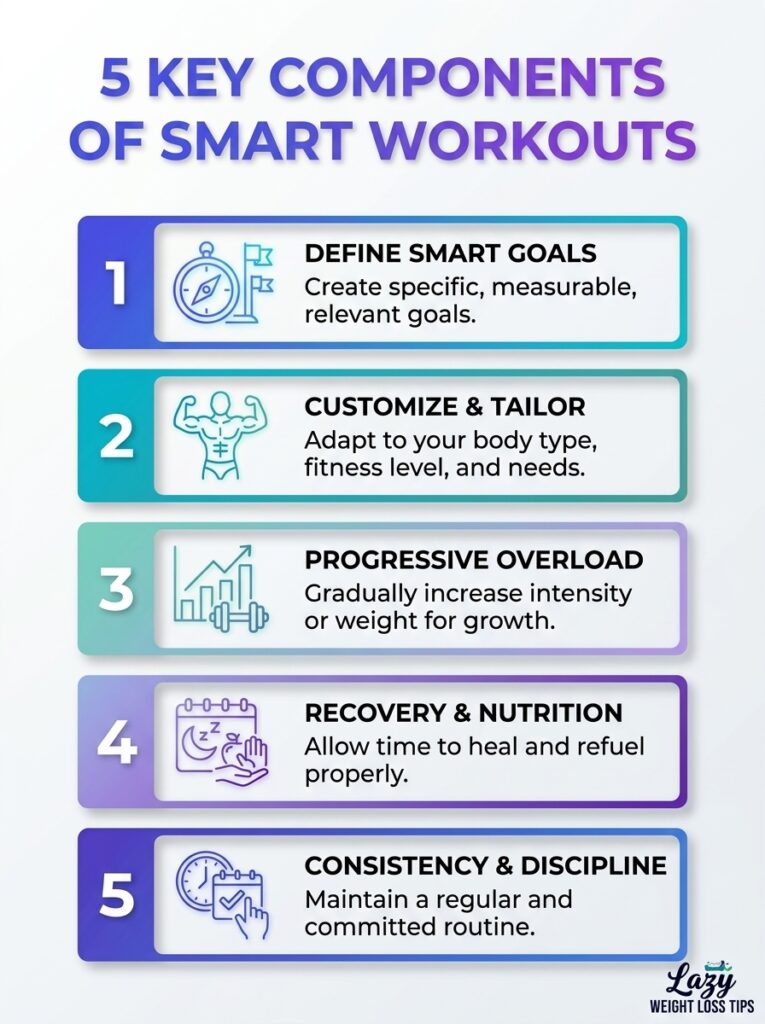
A quick visual guide to building effective workouts by focusing on the five core components. Implement smarter training habits with this concise infographic.
3. How AI and Wearables Are Powering Smart Workouts in 2026
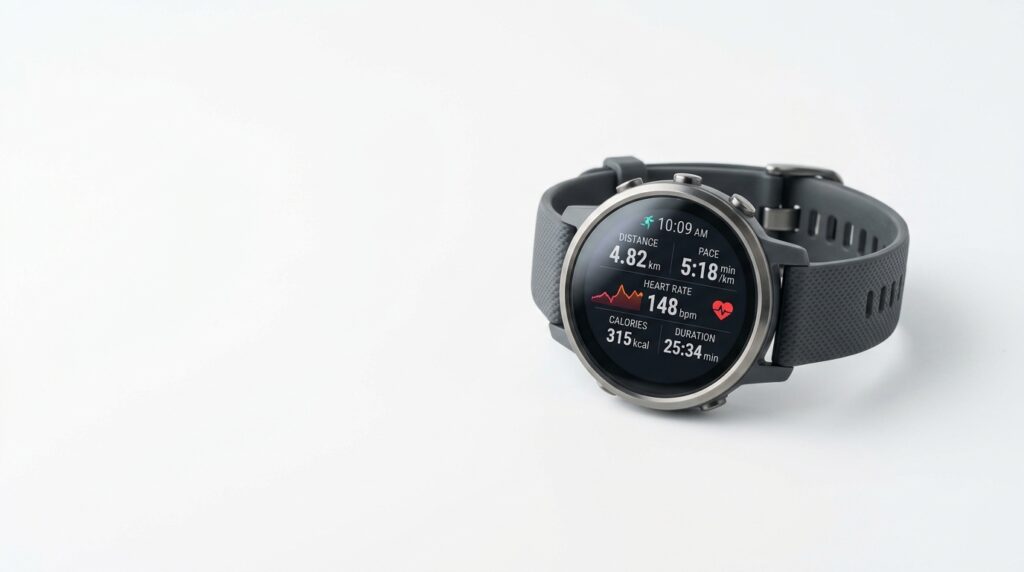
If you still think fitness trackers are just glorified step counters, 2026 has officially passed you by. Today’s wearable devices and AI-powered apps are actively reshaping how people structure, pace, and recover from their workouts.
The data is genuinely interesting here. A full 70% of wearable users now actively apply their device’s output data to inform their exercise or recovery strategies. That’s a huge shift from the days when people wore fitness bands mostly to feel vaguely guilty about their step count.
AI-driven coaching tools now analyze your movement patterns, flag form issues, and suggest real-time adjustments without you needing a personal trainer standing next to you. It’s like having a coach in your pocket, minus the awkward eye contact.
“The future of smart workouts isn’t about doing more. It’s about doing the right things, at the right time, with the right data telling you when to push and when to rest.”
The best part? You don’t need the most expensive device on the market. Even basic fitness apps with heart rate guidance can dramatically change how intentionally you train.
Did You Know?
Users hit their fitness goals 20% faster when utilizing AI-driven workouts compared to traditional training methods.
Source: mordorintelligence.com

4. The 10 Smart Workout Formats That Actually Deliver Results
Not all exercise is created equal. Here are the ten smart workout formats that give you the most return for your time investment.
- HIIT (High-Intensity Interval Training): Short, intense bursts followed by brief rest periods. Most effective in 20 to 25-minute sessions.
- Resistance Band Training: Low-impact, joint-friendly strength work you can do anywhere. Excellent for people over 30.
- Bodyweight Circuit Training: No equipment, no excuses. Push-ups, squats, lunges, and planks in a timed rotation.
- Zone 2 Cardio: A slower, steady-state effort (think brisk walking or light cycling) that builds your aerobic base without destroying your recovery capacity.
- Compound Lifting: Movements like deadlifts, squats, and rows that hit multiple muscle groups at once and maximize your effort-to-result ratio.
- Mobility and Flexibility Work: Often overlooked, but critical for longevity and injury prevention as you get older.
- Walking Workouts: Underrated, accessible, and surprisingly effective when done consistently and with purpose.
- Pilates or Yoga-Based Sessions: Core-focused, calming, and excellent for both strength and stress management.
- Tabata Training: A specific HIIT protocol using 20-second work intervals and 10-second rests. A full workout in under 10 minutes.
- NEAT-Focused Movement: Non-Exercise Activity Thermogenesis, which is basically all the movement you do outside formal workouts. Standing more, taking stairs, fidgeting. It adds up significantly over a day.
The smartest thing you can do is pick two or three of these and rotate them throughout your week rather than trying to do all ten at once.
5. Smart Workout Planning: The Lazy Person’s Weekly Template
The biggest mistake people make with smart workouts is winging it every session. Without a basic structure, decision fatigue kicks in and suddenly it’s 8pm and you’ve convinced yourself the couch counts as a recovery tool.
A simple weekly template removes that friction entirely. Here’s what a realistic, low-effort-but-effective week looks like:
| Day | Workout Type | Duration |
|---|---|---|
| Monday | Bodyweight Circuit | 25 minutes |
| Tuesday | Zone 2 Walk or Light Cardio | 20 to 30 minutes |
| Wednesday | Active Recovery (stretch, mobility) | 15 minutes |
| Thursday | HIIT or Resistance Training | 20 to 25 minutes |
| Friday | Compound Lifting or Full-Body Circuit | 30 minutes |
| Saturday | Fun Activity (hiking, cycling, sports) | Variable |
| Sunday | Complete Rest | Couch-certified |
Notice that only four of the seven days involve structured effort. That’s intentional. Recovery is part of the smart workout system, not a sign that you’re slacking.

6. Smart Workouts and Micro-Habits: How Small Moves Add Up to Big Changes
One of the most underrated strategies in the entire fitness world is the micro-habit: a tiny, repeatable action that barely feels like exercise but accumulates into something genuinely significant over weeks and months.
According to the 2026 wellness landscape data we’ve reviewed, the future of sustainable wellness is increasingly centered on micro-habits and effortless longevity rather than dramatic, unsustainable lifestyle overhauls.
Some micro-habit examples worth adding to your smart workout routine:
- 10 squats every time you make coffee or tea
- A 5-minute walk after every meal
- Calf raises while brushing your teeth
- Standing for at least 10 minutes every hour during your workday
- Doing a 2-minute plank before you check your phone in the morning
None of these feel like a workout. That’s precisely why they work. You’re removing the psychological barrier that makes people skip exercise in the first place.
If you’re not sure where you’re starting from, take our weight loss procrastination assessment to figure out exactly how much of your hesitation is about fitness and how much is just overthinking it.
7. The Role of Nutrition in Smart Workout Results
We’ve said it once and we’ll say it again: smart workouts don’t exist in a vacuum. What you eat before, during, and after your sessions has a direct impact on your energy, your recovery, and your results.
For anyone pursuing weight loss for men and women over 30, popular diets like the keto diet, balanced low-carb plans, and intermittent fasting strategies are frequently paired with smart workout routines for one simple reason: they tend to support better energy management and body composition simultaneously.
Here are the basic nutrition principles that support a smart workout lifestyle:
- Protein first: Aim to hit a protein target with every meal to support muscle repair and satiety
- Pre-workout fuel: A small, easy-to-digest snack 30 to 60 minutes before training improves performance
- Post-workout window: Eating protein within an hour after training supports muscle recovery
- Hydration: Even mild dehydration noticeably reduces workout performance and focus
- Consistency over perfection: One bad meal doesn’t undo a week of good habits
For practical, low-effort meal planning ideas that pair well with an active lifestyle, check out our guide on effortless meal prep strategies for people who hate spending hours in the kitchen.
Did You Know?
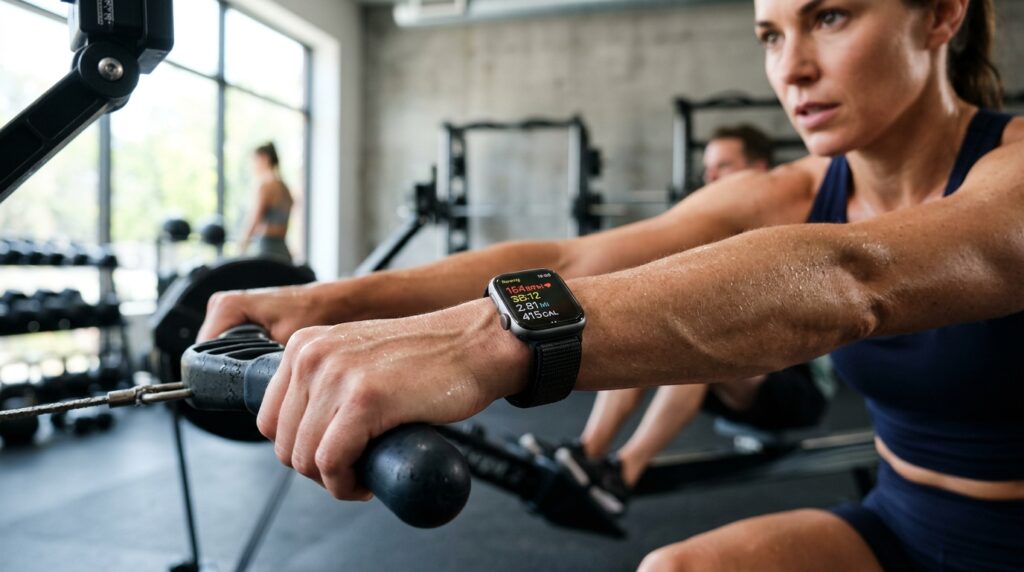
Individuals using wearable devices are 30% more likely to maintain consistent exercise routines than those who do not use them.
Source: communityrecmag.com
8. Smart Workout Recovery: The Step Most People Completely Skip
Recovery is not the boring part of a smart workout plan. It IS the plan. Without it, you’re just repeatedly breaking your body down without giving it the resources to rebuild.
And yet, most people treat rest days like a guilty indulgence rather than a deliberate strategy. Let’s fix that.
Here’s what genuine smart workout recovery actually looks like in practice:
- Sleep: 7 to 9 hours per night is the single highest-return recovery investment you can make
- Active recovery sessions: Light walking, stretching, or yoga on rest days keeps blood flowing without adding stress to your muscles
- Hydration and electrolytes: Especially important if you sweat heavily during training
- Protein intake on rest days: Your muscles rebuild on the days you don’t train, so don’t skip the protein
- Mental decompression: Stress is a physiological load on your body, so managing it is genuinely part of recovery
For a broader look at how longevity and lifestyle choices interact with your fitness results, explore our longevity lifestyle hub.
9. Common Smart Workout Mistakes (And the Lazy Fix for Each One)
Even people who are trying to be strategic about their fitness make the same few mistakes over and over again. Here’s a quick breakdown of the most common ones, and what to do instead.
| The Mistake | The Lazy Fix |
|---|---|
| Going too hard too soon | Start at 60% effort and build up over 3 to 4 weeks |
| Skipping warm-ups | A 3-minute dynamic warm-up is enough and it prevents most common injuries |
| Doing the same routine every week | Swap one exercise per session every two weeks to keep your body adapting |
| Ignoring strength training | Even two resistance sessions per week dramatically changes body composition over time |
| Not tracking anything | Log one metric per session (reps, time, or distance) so you can see progress over weeks |
| Waiting for motivation to strike | Schedule workouts like appointments. Motion creates motivation, not the other way around |
The common thread across all of these? Most smart workout mistakes come from either doing too much at once or doing too little intentionally. Both are fixable with a slightly better system.
For more on the mindset side of building consistent exercise habits, our mindset and motivation section covers the psychology behind why we procrastinate on fitness and what actually moves the needle.
10. How to Know If Your Smart Workout Plan Is Actually Working
Progress in fitness is sneaky. It doesn’t always look like the dramatic before-and-after photos you see online. Real smart workout results tend to show up in quieter, more practical ways.
Here’s what to look for after four to six weeks of consistent training:
- You feel less winded climbing stairs or carrying groceries
- Your resting heart rate has dropped slightly compared to week one
- You’re sleeping more soundly and waking up with more energy
- Your clothes fit differently even if the scale hasn’t moved dramatically
- You’re completing workouts that would have felt impossible a month ago
- Your mood and stress levels are noticeably more stable on days you exercise
If none of these are happening after six weeks, something in the system needs adjusting. It might be the workout frequency, the nutrition approach, the recovery quality, or sometimes just the baseline you started from.
Understanding your metabolic baseline is genuinely useful here. Use our metabolism science resources to get a clearer picture of how your body processes energy and where you might be leaving results on the table.
For people tracking body composition changes specifically, our BMR calculator gives you a useful starting reference point for understanding your calorie needs at rest.
Conclusion
Smart workouts are not about being perfect. They are about being consistent, intentional, and just strategic enough to actually keep showing up week after week.
Whether you’re brand new to exercise, returning after a long break, or someone who has been grinding away at the same routine for years without seeing results, the smart workout approach gives you a real alternative. Less punishment, more progress.
The core principles are straightforward: shorter sessions, strategic movement choices, proper recovery, and a nutrition approach that supports (rather than sabotages) your effort. For weight loss tips and strategies for men and women over 30, combining smart workouts with evidence-backed popular diets and the keto diet principles that prioritize protein and metabolic efficiency remains one of the most practical paths forward in 2026.
Start with one workout this week. Not five. Just one. And if it goes well, do another one a few days later. That’s how sustainable fitness actually builds, and that’s exactly what smart workouts are designed to support.
You’ve got this. And if the couch calls your name between sessions, that’s fine. Recovery is part of the plan.