
What’s Actually Happening Inside Your Body (And How to Use It to Lose Weight Without Trying So Hard)
Here’s something that might change how you think about weight loss forever: Resting Metabolic Rate (RMR) accounts for 60% to 75% of a person’s total daily energy expenditure (TDEE), meaning your body burns the majority of its calories while you’re doing absolutely nothing. Understanding metabolism and science is less about grinding at the gym and more about working with your biology, and if you’re exploring weight loss for men and women over 30s, keto diet options, popular diets, tips and strategies, this is exactly where you need to start.

Key Takeaways
| Question | Quick Answer |
|---|---|
| What is metabolism? | It’s the total process your body uses to convert food into energy, including at rest, during activity, and while digesting food. |
| Can you speed up your metabolism? | Yes, through muscle building, NEAT, protein intake, sleep quality, and strategic eating patterns. |
| What is metabolic age? | It’s a comparison of your BMR to the average BMR for your chronological age group. You can check yours using our Metabolic Age and BMR Calculator. |
| What is NEAT? | Non-Exercise Activity Thermogenesis. It’s the calories you burn through everyday movement like walking, fidgeting, and doing chores. |
| Does metabolism slow after 30? | It can, but the science shows that lifestyle choices like muscle maintenance and protein intake have a much bigger impact than age alone. |
| Is the keto diet good for metabolism? | Keto can shift the body into fat-burning mode, but long-term results depend heavily on sustainability and individual metabolic response. |
| What is BMR? | Basal Metabolic Rate. It’s the number of calories your body needs to function at complete rest, and it’s the foundation of all metabolic science. |
What Metabolism & Science Actually Means (Without the Boring Textbook Stuff)
Metabolism is not just one thing. It’s the entire collection of chemical reactions happening inside your body right now, turning the food you ate for lunch into energy, hormones, muscle repair, and a whole lot more.
The science of metabolism covers three main zones: your Basal Metabolic Rate (BMR), which is calories burned at rest; the Thermic Effect of Food (TEF), which is calories burned digesting your meals; and NEAT plus exercise, which covers all movement-based energy use.
Most people obsess over the exercise part, but metabolism and science tells us that the majority of our daily burn happens in the first two categories. That’s actually great news for lazy people.
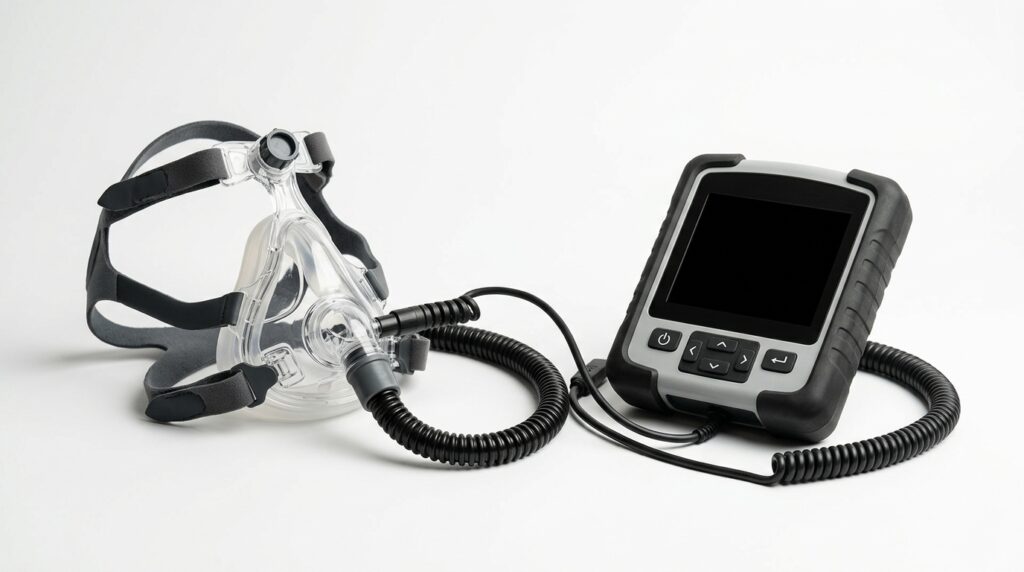
The Metabolism & Science Behind Resting Metabolic Rate
Your RMR is the big engine under the hood. It runs 24 hours a day, seven days a week, whether you’re binge-watching a series or fast asleep.
The two most widely used equations to estimate it are the Mifflin-St Jeor Equation, which factors in height, weight, age, and sex, and the Katch-McArdle Formula, which factors in lean body mass for a more precise result.
Understanding your personal RMR is genuinely one of the most useful things you can do for weight management. It stops you from under-eating (which can slow your metabolism) and over-eating (which contributes to weight gain).
Did You Know?
Every kilogram of muscle mass gained increases the resting metabolic rate (RMR) by approximately 10 to 15 calories per day.
Source: nutritioninsight.com
Metabolic Age: The Number That Actually Tells You How Your Body Is Doing
Your chronological age is just your birthday count. Your metabolic age is a far more useful number because it compares your BMR to the average person your age.
If your metabolic age is lower than your actual age, that’s a win. It means your body is running more efficiently than the average person in your age group.
If it’s higher, don’t panic. It just means there’s room to shift things with some smart, low-effort habits. We put together a full 2026 Metabolic Age and BMR Calculator to help you figure out exactly where you stand right now.
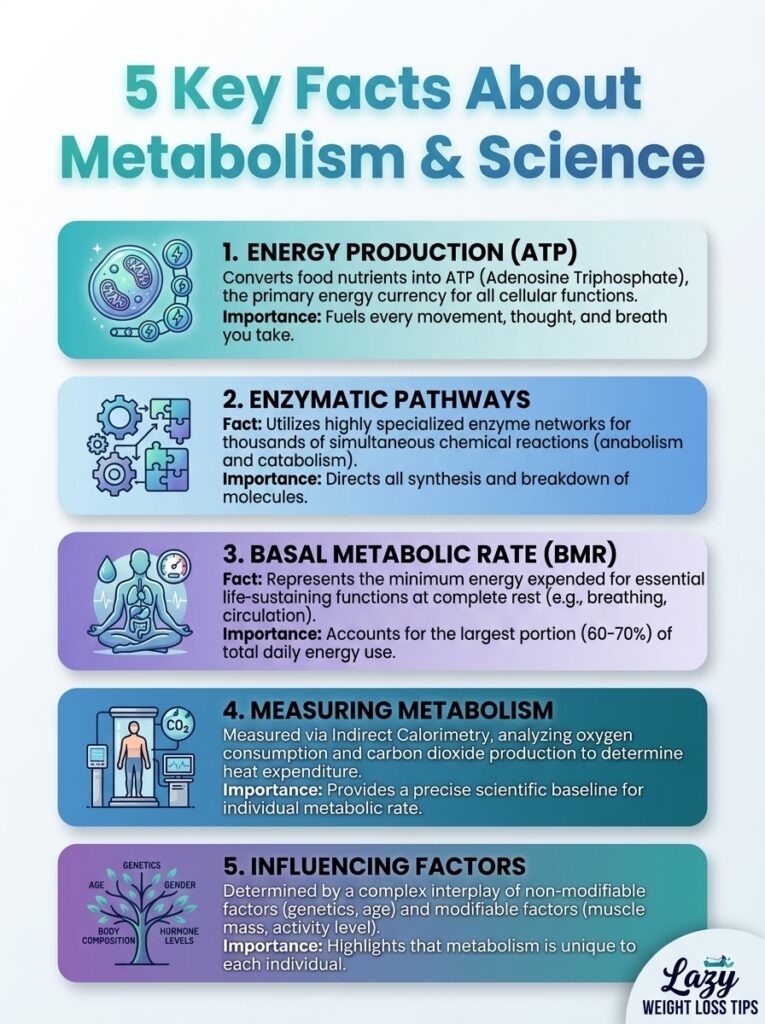
A concise visual guide illustrating five essential facts about metabolism. Designed to complement the article with quick, science-backed insights.

Weight Loss for Men and Women Over 30s: Keto Diet, Popular Diets, Tips and Strategies That Actually Work With Your Metabolism
Once you hit your 30s, the metabolic game does shift a little. Muscle mass starts declining gradually, hormones fluctuate, and the strategies that worked in your 20s might not cut it anymore.
When it comes to weight loss for men and women over 30s, keto diet and popular diets often come up as go-to solutions. Here’s what metabolism and science actually says about them:
- Keto Diet: Shifts the body’s primary fuel source from glucose to fat (ketosis). Can be effective for reducing appetite and lowering caloric intake, but long-term adherence is a real challenge for most people.
- Intermittent Fasting: Works by extending the natural fasting window, which can support insulin sensitivity and fat mobilization. Research in 2026 continues to back its metabolic benefits for adults over 30.
- High-Protein Diets: Protein has the highest Thermic Effect of Food, meaning your body burns more calories digesting it compared to carbs or fat. A big win for lazy metabolic optimization.
- Mediterranean Diet: Not technically a “diet,” more of an eating pattern. Supports metabolic health through whole foods, healthy fats, and fiber without restrictive rules.
- Fibermaxxing: The newest 2026 trend where people prioritize fiber intake for gut health, satiety, and metabolic regulation. Registered dietitians are backing this one hard right now.
The honest truth about tips and strategies? The best diet for your metabolism is the one you’ll actually stick to. Consistency beats perfection every single time.
NEAT: The Laziest Metabolism & Science Hack You’re Not Using
NEAT stands for Non-Exercise Activity Thermogenesis, and it might be the most underrated concept in all of metabolism and science.
It covers every calorie you burn outside of formal exercise, including walking to the mailbox, fidgeting in your chair, standing at your desk, carrying groceries, and even chewing your food.
Research consistently shows that people with naturally higher NEAT levels tend to burn significantly more calories per day than those who are sedentary, without ever setting foot in a gym. You can dig into more of these terms in our Procrastinator’s Health and Wellness Glossary.
“Small, consistent movements throughout the day add up to a surprisingly significant metabolic impact over time. You don’t need a gym. You need to stop being completely still.”
Easy ways to boost NEAT starting today:
- Take a short walk after each meal (even 10 minutes counts).
- Stand up every hour if you have a desk job.
- Park further away from entrances.
- Take the stairs when it’s not totally unreasonable to do so.
- Pace while you’re on phone calls.
Sleep, Stress, and What Metabolism & Science Says About Both
If you’re only getting five or six hours of sleep and wondering why your weight-loss efforts aren’t working, metabolism and science has your answer.
Poor sleep disrupts the balance of ghrelin (the hunger hormone) and leptin (the fullness hormone), which means you feel hungrier, eat more, and have less energy to move. It’s a metabolic double whammy.
Chronic stress elevates cortisol levels, which signals your body to store fat, particularly around the midsection. Managing stress is not just a wellness buzzword, it’s a legitimate metabolic strategy.
Simple, low-effort ways to support your metabolism through sleep and stress:
- Aim for 7 to 9 hours of sleep consistently.
- Keep your bedroom cool and dark. Your body burns slightly more calories maintaining temperature during sleep.
- Limit screens before bed to support natural melatonin production.
- Try a five-minute breathing exercise before sleep to lower cortisol.

Protein, Fiber, and the New Rules of Metabolic Eating in 2026
Two nutrients dominate the 2026 conversation around metabolism and science: protein and fiber. And honestly, for good reason.
Protein supports muscle retention (critical for keeping your RMR up), reduces appetite through satiety hormones, and has the highest Thermic Effect of Food at roughly 20% to 30% of its caloric content burned during digestion.
Fiber feeds your gut microbiome, slows glucose absorption, and keeps you fuller for longer without adding significant calories. The trend of “fibermaxxing” is currently one of the most talked-about strategies among nutrition researchers heading through 2026. Pair this approach with smart effortless meal prep strategies and you’ve got a genuinely sustainable system.
Metabolism-supporting foods to prioritize:
- Eggs, chicken, Greek yogurt, cottage cheese (protein powerhouses).
- Lentils, black beans, oats, chia seeds (fiber-rich and filling).
- Green tea and coffee (caffeine has a modest but real thermogenic effect).
- Spicy foods containing capsaicin (temporarily raises metabolic rate slightly).
How Wearables and AI Are Changing Metabolism & Science in 2026
In 2026, tracking your metabolism is no longer reserved for clinical settings. Wearable technology now gives everyday people access to data that was previously only available in labs.
Devices like smartwatches, continuous glucose monitors (CGMs), and fitness rings can track resting heart rate variability, sleep quality, activity levels, and even blood glucose trends, all of which feed directly into understanding your personal metabolic picture.
Did You Know?
Registered dietitians predict that “fibermaxxing” will emerge as a dominant metabolic trend in 2026, rivaling the popularity of high-protein diets.
Source: myfitnesspal.com
This data-driven approach to metabolism and science means you no longer have to guess whether your habits are working. You can actually see the results of small changes in real time.
Our guide on smart workouts for men and women over 30 covers how AI and wearables are being used to make movement more efficient and far less time-consuming.
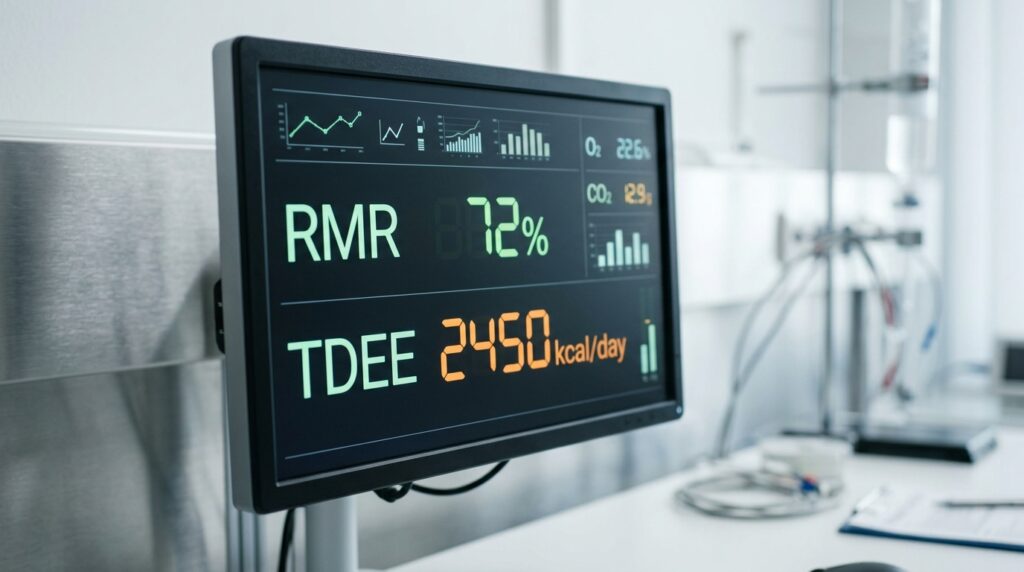
The Procrastinator’s Guide to Metabolism & Science: Using Habit Stacking
Here’s the thing about metabolism and science: knowing the information is only half the battle. The other half is actually doing something with it, and that’s where most people get stuck.
Habit stacking is one of the most effective behavioral strategies for building metabolic habits without relying on motivation. The idea is simple: attach a new behavior to something you already do automatically.
Examples of metabolic habit stacking:
- While waiting for your coffee to brew, do 10 squats or a one-minute stretch.
- After every meal, take a short walk, even just around the block.
- Before every meal, drink a full glass of water to support hydration and reduce overeating.
- Every time you open the fridge, grab a protein-first snack rather than a carb-heavy one.
Not sure what’s actually holding you back from getting started? The Weight Loss Procrastination Assessment can help you pinpoint your behavioral patterns and find the lowest-effort entry point for change.
The 2026 Wellness Landscape and What Metabolism & Science Tells Us About Where We’re Headed
The wellness industry in 2026 is shifting in a really interesting direction. The obsession with extreme diets and intense workout culture is giving way to a more nuanced, science-backed understanding of metabolic health.
Key shifts happening right now include a massive rise in GLP-1 medication use, the normalization of CGM devices beyond diabetes management, and a growing focus on longevity over aesthetics as the primary motivation for weight management.
Our detailed breakdown of the 2026 State of Wellness and Obesity Trends in the USA shows just how significant this shift has become, and what the economic and personal health implications are for everyday Americans.
The takeaway for anyone focused on weight loss for men and women over 30s? The science is now firmly on the side of sustainable, low-effort, habit-driven change over crash diets and extreme exercise protocols.

Common Metabolism Myths That Science Debunked (Finally)
Metabolism and science gets misrepresented constantly, especially on social media. Let’s clear up the biggest myths so you can stop wasting energy on things that don’t actually matter.
| The Myth | What Science Actually Says |
|---|---|
| “Eating small meals all day boosts metabolism.” | Total daily caloric intake matters more than meal frequency. The metabolic difference is minimal. |
| “Cardio is the best way to speed up metabolism.” | Strength training has a longer-lasting metabolic effect because it builds muscle, which raises RMR 24/7. |
| “Metabolism is fixed by genetics and can’t be changed.” | While genetics play a role, lifestyle factors like sleep, muscle mass, and diet have a significant influence. |
| “Skipping breakfast slows your metabolism.” | Total daily intake is what matters. Intermittent fasting, which often skips breakfast, can actually support metabolic efficiency. |
| “Gaining muscle massively increases calorie burn.” | Each kilogram of muscle adds roughly 10 to 15 calories per day to your RMR. Helpful, but not a magic fix on its own. |
The mindset and motivation section of this site goes deeper into how all-or-nothing thinking around these myths can actually sabotage progress before it even starts.
Conclusion: Metabolism & Science Is Your Lazy Weight Loss Superpower
Here’s the bottom line: metabolism and science is not some complicated lab-coat subject reserved for researchers. It’s practical, usable, and genuinely on your side when you understand it.
You don’t need to run marathons or survive on salad. You need to know your BMR, protect your muscle mass, sleep well, eat enough protein and fiber, move more throughout the day, and stop starting over every Monday.
Whether you’re deep into exploring weight loss for men and women over 30s, keto diet options, popular diets, tips and strategies, or you’re just starting to figure out why nothing has worked yet, the answer almost always traces back to metabolism and science.
Start with one thing. Figure out your metabolic baseline using our BMR and Metabolic Age Calculator. Then explore everything else on the Metabolism and Science hub at your own pace.
Small wins. Consistent habits. Real results. That’s the whole plan.