Glucose spiking awareness and the ‘food order’ hack might just be the simplest weight loss trick nobody told you about. Here’s a stat that changes everything: eating food in the right order, specifically fiber first, can reduce a meal’s glucose spike by up to 75%, without changing a single ingredient on your plate. If you’re curious about weight loss for men and women over 30s, keto diet followers, and people exploring popular diets, tips and strategies, this one small shift could be the game-changer you’ve been waiting for.
Key Takeaways
| Question | Quick Answer |
|---|---|
| What is glucose spiking awareness? | It’s the practice of understanding how different foods cause your blood sugar to rise sharply, and using that knowledge to eat smarter. |
| What is the ‘food order’ hack? | Eating your vegetables and protein before your carbs at any meal to significantly reduce how high your blood sugar rises. |
| Does the food order hack help with weight loss? | Yes. Lower glucose spikes mean lower insulin, which means your body can burn stored fat more easily. |
| Do I have to change what I eat? | No. You eat the exact same foods, just in a different order. That’s the whole point of this hack. |
| How fast does it work? | You’ll see the effect within one hour of your very first meal where you apply it. |
| Is this backed by research? | Yes. Multiple clinical studies including research from Cornell University confirm significant reductions in glucose spikes using food order changes. |
| Who benefits most from glucose spiking awareness? | Anyone, but especially those focused on weight loss for men and women over 30s, people following popular diets, and those who feel tired after meals. |
What Is Glucose Spiking Awareness (The ‘Food Order’ Hack), Exactly?
Let’s keep this simple. Every time you eat carbohydrates, your body breaks them down into glucose (sugar), which enters your bloodstream. When that happens too quickly, you get a “glucose spike.”
A spike is that sharp rise in blood sugar followed by a crash. It’s what causes that after-lunch slump, the afternoon brain fog, and those annoying cravings an hour after eating.
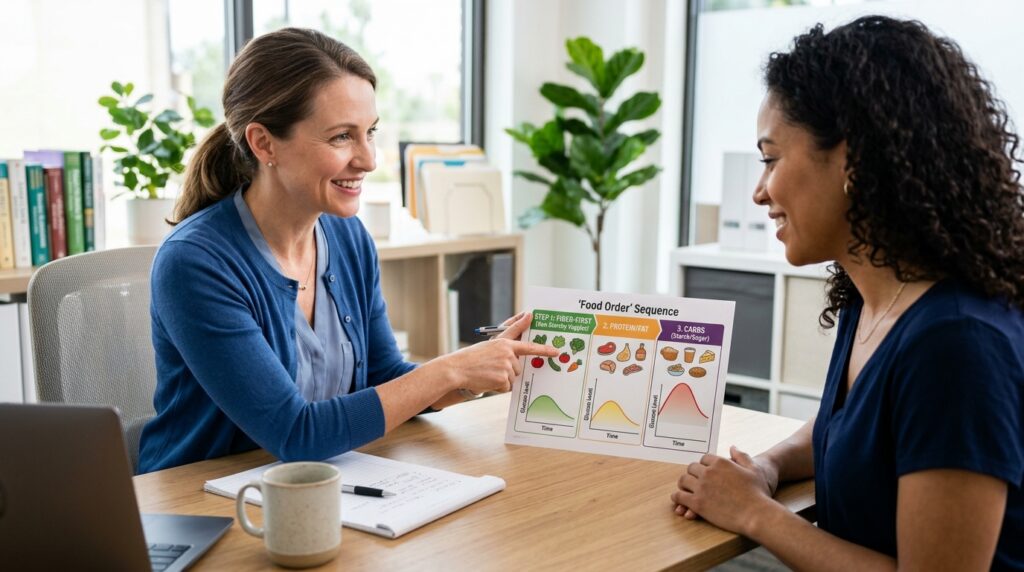
The ‘food order’ hack is the insight that the sequence in which you eat your food controls how fast that glucose hits your bloodstream. Specifically:
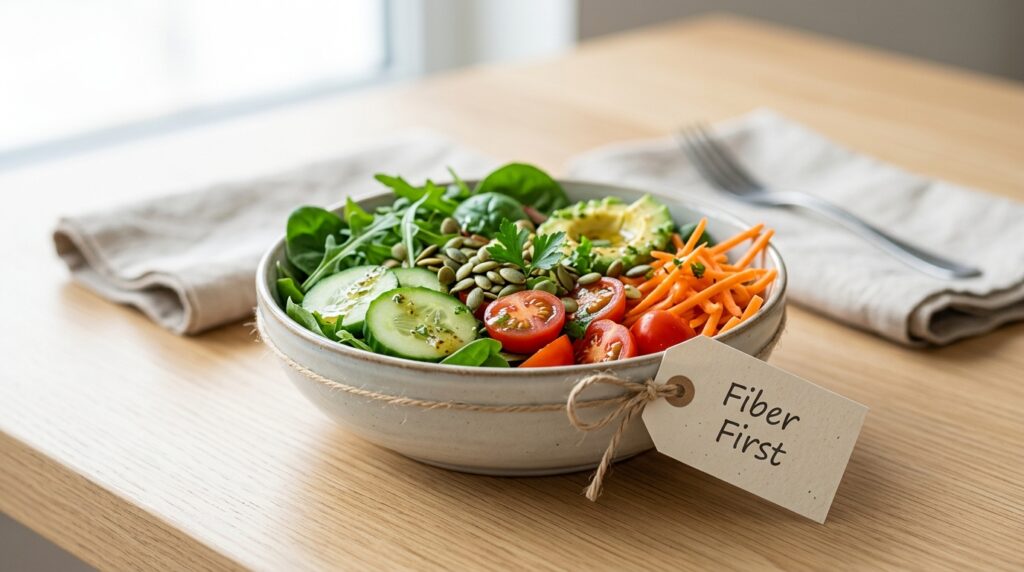
- Fiber-rich vegetables first coat your gut lining and slow down sugar absorption.
- Protein and fat next further slow digestion and trigger fullness signals.
- Carbohydrates last means by the time they arrive, your gut is already acting like a speed bump for glucose.
The result? A flatter, gentler blood sugar curve. Less insulin released. Less fat stored. More energy throughout the day. And you didn’t give up a single food you enjoy.
This is exactly the kind of thing we love at LazyWeightLossTips.com. It scores a perfect 10 on our Effort-to-Results Ratio. You’re doing the same thing you were already doing (eating), just in a smarter order.
Why Glucose Spiking Awareness Matters More Than Most Popular Diets
Here’s something the traditional diet industry won’t admit: most popular diets, from low-calorie plans to intense restriction programs, fix the what but ignore the when and how.
Weight loss for men and women over 30s, keto diet approaches, and other popular diets, tips and strategies often focus entirely on cutting things out. The food order hack doesn’t ask you to cut anything out at all.
Why does glucose matter so much for weight? Here’s the short version:
- A glucose spike triggers a big release of insulin, the hormone that tells your body to store energy as fat.
- High insulin levels block fat burning. While insulin is elevated, your body cannot access your fat stores for fuel.
- After a spike comes a crash, which triggers hunger and cravings, often for more carbs, starting the cycle again.
- Repeated spikes over time can make your cells less responsive to insulin, which makes weight loss even harder.
Flatten the spike. Lower the insulin. Give your body a window to burn fat. That’s the chain of events glucose spiking awareness puts in motion.
And it works on top of whatever else you’re already doing. Keto diet? It works. Fasting? It works. Not dieting at all? It still works.
The Science Behind the ‘Food Order’ Hack for Glucose Spiking Awareness
We know you’re probably thinking, “This sounds too easy.” So let’s talk about the research, because it’s genuinely surprising.
A study from Cornell University (published in a landmark diabetes journal) tested what happened when people ate the same meal but in different orders. One group ate carbs first. The other ate protein and vegetables first, then ate the same carbs 15 minutes later.
The result? Blood sugar levels were 37% lower one hour after eating in the group that ate vegetables and protein first. That’s a massive difference from one simple change.
A 44% reduction in glucose peaks. Not from cutting carbs. Not from going to the gym. Just from eating them last.
Researchers believe this happens because of something called the “viscous fiber barrier.” When you eat vegetables first, the fiber from those vegetables literally coats the walls of your small intestine. When the carbs arrive later, they have to pass through this fiber layer, which slows down how quickly glucose gets absorbed into your blood.
It’s your gut working as a natural glucose buffer. And you activated it just by eating your salad first.
How to Actually Do the Food Order Hack (Step by Step)
This is the part we love. Because the instructions are about as simple as anything gets.
Step 1: Start with vegetables.
Eat your fibrous vegetables first. Think leafy greens, broccoli, courgette, cucumber, peppers. Aim to eat these for a few minutes before moving on.
Step 2: Eat your protein and fat.
Move on to your meat, fish, eggs, cheese, or legumes. This further slows digestion and starts triggering your fullness hormones.
Step 3: Eat your carbs last.
This is when you eat your bread, rice, pasta, potato, or whatever carb is part of the meal. By this point, your gut is already set up to handle it without a spike.
That’s it. Three steps. No counting. No measuring. No giving anything up.
“The food order hack passes our ‘Lazy Factor’ test with flying colors. It requires zero extra effort, zero extra time, and you get to eat every single thing you were going to eat anyway.”
You can apply this at breakfast, lunch, dinner, and even snacks. It stacks. Every meal you apply it to builds on the last, creating consistently flatter glucose curves throughout the day.
Five practical food-order hacks to prevent glucose spikes. A quick guide for applying Glucose Spiking Awareness to meals.
Glucose Spiking Awareness and Weight Loss for Men and Women Over 30s: Why This Age Group Needs It Most
If you’re over 30, your body handles glucose differently than it did at 22. This is just biology, and it’s not your fault.
As we age past 30, a few things happen that make glucose spiking awareness especially important for weight loss for men and women over 30s:
- Insulin sensitivity drops with age, meaning your body needs more insulin to deal with the same amount of glucose.
- Muscle mass decreases, and muscle is one of the main tissues that absorbs glucose from the blood.
- Stress hormones rise with the demands of life over 30 (work, kids, responsibilities), and stress hormones drive glucose up even without food.
- Sleep quality often drops, and poor sleep is directly linked to worse glucose regulation the following day.
The result is that the same meal you ate at 25 will spike your glucose higher at 35. The food order hack helps offset this natural decline in glucose handling, without asking you to overhaul your life.
For weight loss for men and women over 30s, keto diet followers, and those exploring popular diets, tips and strategies, combining this hack with your current approach can amplify results significantly. You’re essentially giving your metabolism a head start at every single meal.
Want to take your results even further? Check out this resource on optimizing your metabolism the lazy way. It lines up perfectly with the glucose spiking awareness approach.

Glucose Spiking Awareness vs. Keto Diet and Other Popular Diets: Which One Actually Wins?
A lot of popular diets are already trying to solve the glucose spike problem, they just do it the hard way.
Here’s a quick comparison of how the food order hack stacks up:
| Approach | How It Tackles Glucose | Effort Level | Sustainable? |
|---|---|---|---|
| Food Order Hack | Slows glucose absorption via meal sequence | Extremely low | Yes, forever |
| Keto Diet | Removes carbs almost entirely | Very high | Hard to maintain |
| Calorie Counting | Reduces overall intake but doesn’t manage spikes | High | Often abandoned |
| Low GI Diet | Swaps high-spike carbs for lower-spike ones | Moderate | Moderate |
| Intermittent Fasting | Reduces total number of glucose events per day | Moderate | Varies by person |
The food order hack is the only approach in this table that requires no sacrifice, no restriction, and no planning beyond remembering one simple rule: fiber first, carbs last.
Better yet, it works beautifully alongside popular diets, tips and strategies. If you’re on keto, you’re already eating very low carbs, but on the days you have more, the food order hack keeps your glucose in check. If you’re fasting, applying this hack when you do break your fast makes the glucose response even gentler.
Extra Boosts: Other Ways to Apply Glucose Spiking Awareness
The food order hack is the core of glucose spiking awareness, but there are a few other easy add-ons that sharpen the effect even further.
1. Add a tablespoon of apple cider vinegar before meals.
Research shows vinegar before eating can reduce the glucose spike from that meal by around 20%. Just dilute it in water. It takes 30 seconds.
2. Take a short walk after eating.
Even a 10-minute walk after a meal helps your muscles absorb glucose from your blood, flattening the curve significantly. It doesn’t need to be a workout.
3. Don’t eat carbs alone.
If you’re snacking on something carb-heavy (like fruit, crackers, or bread), pair it with protein or fat. A handful of nuts with your apple. Cheese on your crackers. This is a mini version of the food order principle.
4. Eat slower.
Slower eating gives your gut more time to set up that fiber barrier before the carbs arrive, even if you’re eating everything at once. Chewing more and putting your fork down between bites genuinely makes a difference.
This is a big one. The food order hack isn’t just about blood sugar. By starting with protein and fiber, you’re literally triggering your body’s own appetite-suppressing hormones. You end up eating less overall, not because you’re restricting yourself, but because your body genuinely signals that it’s had enough sooner.
This is what we call a Hidden Calorie Burner at LazyWeightLossTips.com. It’s one of our core pillars, and it works because it’s rooted in biology, not willpower.
Common Mistakes People Make With Glucose Spiking Awareness
This hack is simple, but there are a few ways people accidentally undercut its effect. Here’s what to watch out for:
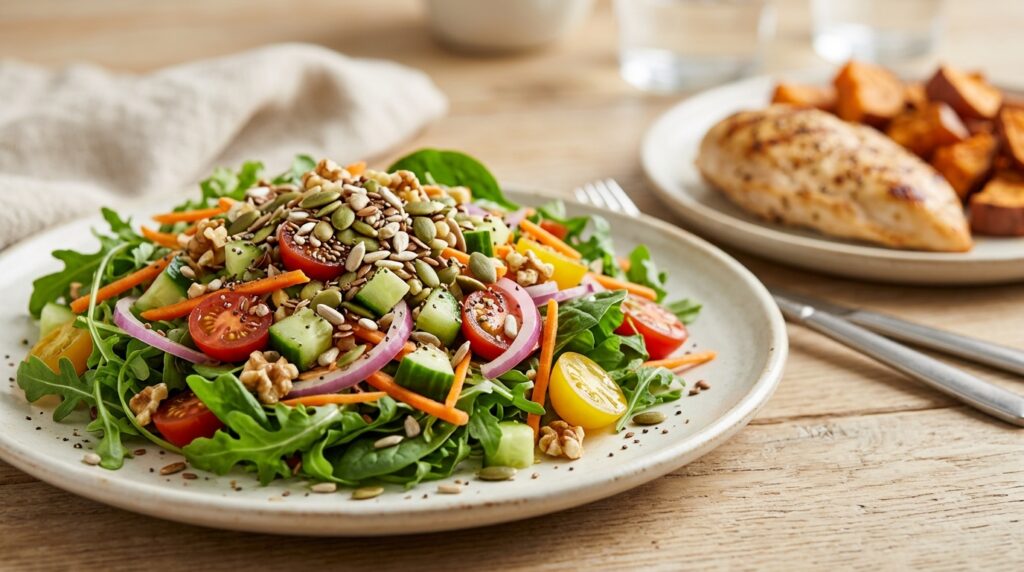
- Eating vegetables but only a tiny amount. You need enough fiber to actually coat your gut. A few lettuce leaves won’t cut it. Aim for a decent portion of fibrous veggies before moving on.
- Drinking sweet drinks with the carbs. Liquid sugar (juices, sodas, sweet teas) bypasses the fiber barrier almost entirely. Drink water with your meal.
- Rushing through the meal. The gut needs a little time to set up between phases. Try to spend at least 3 to 5 minutes on the veg and protein before diving into the carbs.
- Skipping vegetables at meals with no obvious “veggie.” At a burger restaurant? Eat any side salad or coleslaw first. At a breakfast joint? Eat any eggs or tomatoes before the toast or hash browns.
- Thinking it only works at dinner. Breakfast glucose spikes are actually some of the worst of the day. Apply the hack at every meal for compounded results.
The glucose spiking awareness approach works best when it becomes automatic. After a few weeks, you won’t even think about it. It just becomes the way you eat.
Real-Life Examples of the Food Order Hack at Common Meals
Let’s make this even more practical. Here’s how the food order hack looks at real meals:
| Meal | Old Order (Spike Risk) | Food Order Hack (Flatten the Curve) |
|---|---|---|
| Full English Breakfast | Toast and beans first, then eggs | Eggs and tomatoes first, then beans, then toast last |
| Pasta Dinner | Bread roll first, then pasta with sauce | Side salad first, then protein (meat/cheese), then pasta |
| Takeaway (Burger) | Fries first while waiting for burger | Eat the burger filling first (patty, salad), bun last, fries last |
| Work Lunch (Sandwich) | Eat the whole sandwich together | Eat the filling first, then the bread |
| Sushi Night | Rice-heavy rolls first | Edamame and sashimi first, cucumber rolls, rice-heavy rolls last |
Notice how none of these examples remove any food from the meal. Everything stays. The order is the only thing that changes.
This is sustainable in a way that popular diets, tips and strategies simply can’t compete with, because it’s not a diet. It’s a way of eating that you can apply anywhere, at home, at restaurants, at parties, forever.
Conclusion: Glucose Spiking Awareness and the ‘Food Order’ Hack Is the Laziest Win in Weight Loss
Glucose spiking awareness and the ‘food order’ hack is one of those rare discoveries that makes you feel slightly annoyed nobody told you sooner.
You don’t need a new meal plan. You don’t need to buy special products. You don’t need more time in your day. You just need to eat your vegetables before your rice.
For those focused on weight loss for men and women over 30s, keto diet strategies, and other popular diets, tips and strategies, this approach is the perfect addition to whatever you’re already doing. It works on top of everything else, amplifying results without adding any burden.
The research is clear. A flatter glucose curve means lower insulin. Lower insulin means more fat burning. More fat burning means progress that actually feels effortless, because for once, it genuinely is.
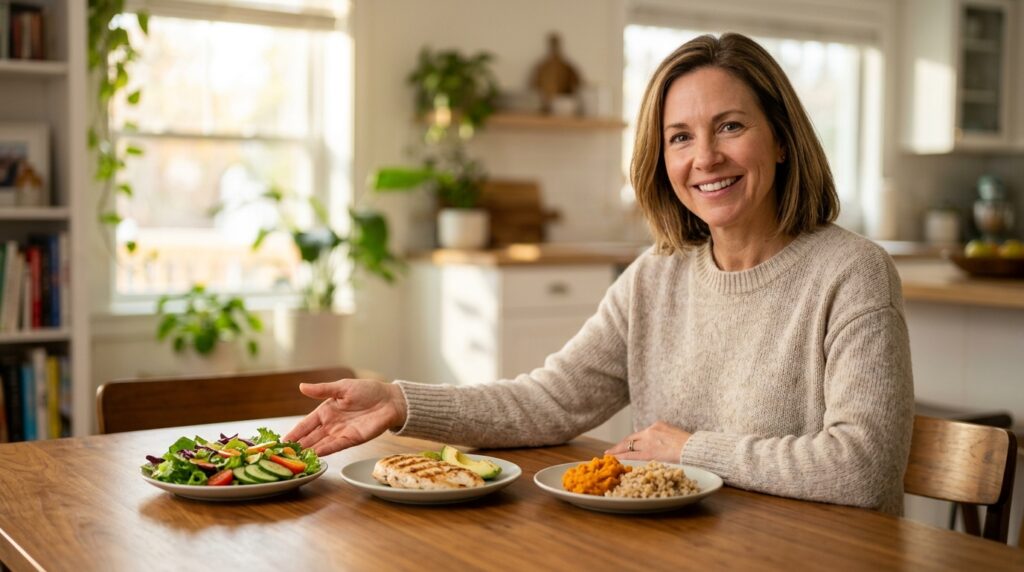
Start at your very next meal. Eat the salad first. Then the protein. Then the carbs. That one change, repeated consistently, is one of the most powerful things you can do for your weight and your energy levels in 2026.
If you want to explore more approaches that work with your body’s biology instead of fighting it, this resource on lazy metabolic priming is worth a look. It’s very much in the same spirit as glucose spiking awareness, high results, minimal effort.
Frequently Asked Questions
Does the food order hack really reduce glucose spikes without changing what you eat?
Yes. Multiple studies confirm that eating fiber and protein before carbs can reduce glucose peaks by 37% to 75%, depending on the meal. Glucose spiking awareness and the ‘food order’ hack works because of the physical barrier fiber creates in your gut, slowing how fast carbs are absorbed, not because of any change in the food itself.
How quickly will I notice results from applying the food order hack?
You’ll notice a difference in energy and fullness after your very first meal where you apply it. The blood sugar curve flattens immediately. Over weeks, consistent application of glucose spiking awareness through the food order hack contributes to lower average insulin levels and easier fat burning.
Is the food order hack useful if I’m already on a keto diet or other popular diets?
Absolutely. The food order hack sits on top of any eating plan, including keto, low-calorie, and Mediterranean approaches. For weight loss for men and women over 30s exploring popular diets, tips and strategies, this hack enhances whatever you’re already doing by reducing the glucose impact of any carbs you do consume.
What if my meal doesn’t have obvious vegetables in it?
Apply the principle as best you can. Eat the protein-heavy component first and the carb-heavy component last. Even partial application of glucose spiking awareness (the ‘food order’ hack) produces better results than eating everything together or carbs first.
Does the food order hack work for breakfast glucose spikes?
Yes, and it’s especially important at breakfast because morning glucose responses tend to be more intense. Eating eggs or Greek yogurt before toast or cereal is one of the most effective applications of glucose spiking awareness and the ‘food order’ hack.
Is this the same thing as intermittent fasting or just eating less?
No, it’s completely different. Intermittent fasting reduces the number of eating windows. Calorie restriction reduces quantity. The food order hack doesn’t change either of those things. It only changes the sequence of foods within a normal meal to reduce the glucose spike produced by that meal.
Can glucose spiking awareness help with energy crashes and afternoon fatigue in 2026?
Yes. The energy crash you feel after a meal is directly caused by the insulin spike following a glucose spike. Applying the ‘food order’ hack to flatten that glucose curve means the crash is much smaller or doesn’t happen at all. Many people report dramatically more stable energy throughout the day after consistently using glucose spiking awareness at every meal.